spionage

Cables Shed Light on Ex-K.G.B. Officer’s Death

Alan Cowell – Shortly after the radiation poisoning in London of a former K.G.B. officer, Alexander V. Litvinenko, a senior Russian official asserted that Moscow had been tailing his killers before he died but had been waved off by Britain’s security services, according to a cable in the trove of secret American documents released by WikiLeaks.

The Russian assertion, denied by British officials, seemed to revive a theory that the British intelligence services played a murky role in the killing — a notion voiced at the time by some in Moscow to deflect allegations of the Kremlin’s involvement in the murder.

The cable, dated Dec. 26, 2006, and marked “secret,” was one of several in the WikiLeaks trove that tried to examine the still unanswered question of who exactly ordered the use of a rare radioactive isotope, polonium 210, to poison Mr. Litvinenko, leading to his death on Nov. 23, 2006. Russia produces polonium commercially, but the process is closely guarded and British investigators have concluded that the isotope could not have been easily diverted without high-level intervention.

In a telephone interview, Marina Litvinenko, the widow of the former K.G.B. officer, called the Russian assertion “disinformation.”

“When they prepared this, they never expected polonium would be known as a murder weapon,” she said. “But after Nov. 23, they needed some kind of disinformation.” She said that “polonium could not be used without very high level” involvement of the security services.

A separate cable from Paris suggested that at least one senior American official, Daniel Fried, seemed skeptical of statements by Vladimir V. Putin — then Russia’s president and now prime minister — that he was unaware of the events leading to the killing, which Britain has blamed on another former K.G.B. officer, Andrei K. Lugovoi.

Mr. Lugovoi, now a member of the Russian Parliament, has denied British charges that he murdered Mr. Litvinenko by slipping polonium into a teapot at a British hotel where the two men met on Nov. 1, 2006. Russia has refused a British request for Mr. Lugovoi’s extradition and the relationship between two countries has not fully recovered from deep strains after Mr. Litvinenko’s death.

Among several cables mentioning the affair, perhaps the most sensitive covers a meeting in Paris on Dec. 7, 2006, between an American ambassador at large, Henry Crumpton, and Anatoly Safonov, at the time a special representative of Mr. Putin. That encounter had a whiff of an espionage film script. The two met over a dinner described as “amicable.” Both men were veterans of their countries’ intelligence services, and were now assigned by their governments to cooperate in counterterrorism.

Mr. Crumpton had led the C.I.A.’s operation in Afghanistan after the Sept. 11, 2001, attacks. Mr. Safonov was a former K.G.B. colonel-general who had risen to high office as deputy director in its successor organization, the F.S.B., in the 1990s, according to Andrei Soldatov, a Russian journalist who has just published a study of that organization called “The New Nobility.”

One of Mr. Safonov’s subsequent assignments in the 2000s was to head a joint British-Russian counterterrorism group, which was dissolved in the diplomatic freeze provoked by Mr. Litvinenko’s death, Mr. Soldatov said in a telephone interview.

According to the leaked cable, “Safonov claimed that Russian authorities in London had known about and followed individuals moving radioactive substances into the city, but were told by the British that they were under control before the poisoning took place.”

The cable did not identify the people carrying the material. Mr. Safonov’s comments reflected allegations by Mr. Lugovoi who, at the time, accused Mr. Litvinenko of being in the pay of British intelligence. But Mr. Safonov’s remarks seemed likely to be taken by British officials as an accusation of incompetence, with the poisoning happening under their eyes. If confirmed, they would also raise the question of how Britain reacted to the idea of Russian spies tailing their citizens on British soil.

The question of who ordered the killing surfaced in a separate leaked cable, also marked “secret,” about a meeting in Paris — on the same day as the former spies’ dinner — between a French presidential adviser, Maurice Gourdault-Montagne and Mr. Fried, then the assistant secretary of state for European and Eurasian affairs in the Bush administration. Mr. Fried is now the Guantánamo special envoy, appointed by President Obama and charged with persuading other countries to take detainees held at the prison in Cuba.

The French official, the cable said, ascribed the killing to “rogue elements” in the Russian security services. But Mr. Fried “commented that the short-term trend inside Russia was negative, noting increasing indications that the U.K. investigation into the murder of Litvinenko could well point to some sort of Russian involvement.”

Later, it said: “Fried, noting Putin’s attention to detail, questioned whether rogue security elements could operate, in the U.K. no less, without Putin’s knowledge. Describing the current atmosphere as strange, he described the Russians as increasingly self-confident, to the point of arrogance.”

Mr. Fried’s reported remark was the first time that such a suggestion by a serving American officer was made public.

That remark reflected some suspicions about high-level Kremlin involvement in the period after Mr. Litvinenko’s death, when conspiracy theories blossomed relating to Mr. Litvinenko’s activities as a visceral public enemy of Mr. Putin and as a whistle-blower on Russian organized crime. Mr. Litvinenko fled Russia in 2000 and sought asylum in Britain, where he acquired British citizenship shortly before his death. Mr. Fried declined to comment publicly on the content of the cable.

Another cable, from the American Embassy in Madrid, marked “confidential” and dated Aug. 31, 2009, cited an article in the newspaper El País. The article said that Mr. Litvinenko had tipped off Spanish security officials about Russian organized crime figures in Spain and had provided information about four suspected gangsters at a previously unrecorded meeting with Spanish officials in May 2006.

That report added one more layer to the debate about the motives of his killers — could the killing have been done in revenge for his disclosures about the mob?

Perhaps the most tantalizing item in the cables was related to Dmitri Kovtun, a business associate of Mr. Lugovoi, who passed through Hamburg on his way to London on Nov. 1 and was, by his own account, present when Mr. Lugovoi met Mr. Litvinenko at the Millennium Hotel in the Mayfair district of London on Nov. 1, 2006.

According to a confidential cable from the American consulate in Hamburg, dated Dec. 19, 2006 — about a month after Mr. Litvinenko’s death — a senior German counterterrorism official, Gerhard Schindler, “said Kovtun left polonium traces on everything he touched” in Hamburg. That much had been publicly reported.
But, the cable said, “German investigators concluded Kovtun did not have polonium traces on his skin or clothes; Schindler said the polonium was coming out of his body, for example through his pores.”

That suggested that the exposure took place during an earlier visit to London by Mr. Lugovoi and Mr. Kovtun in October 2006, during which they had met Mr. Litvinenko; they claimed later that they themselves had been victims of a poisoning attempt. Mr. Litvinenko’s supporters and British investigators, however, have long described the earlier visit as a part of the conspiracy against Mr. Litvinenko.

The cable from Hamburg said no traces of polonium were found on the Germanwings plane Mr. Kovtun took to London, and German authorities had been preparing to ground the Aeroflot plane that took him to Hamburg from Moscow to test it for traces of the isotope. “Schindler said Russian authorities must have found out about German plans because ‘at the last minute’ Aeroflot swapped planes,” the cable said. “Schindler said he did not expect Aeroflot to fly the other plane to Germany any time soon.”

All articles about the case

afrika

Ugandan Girls Entering Juba Prostitution Racket

Florence Ogola – Growing concern that vulnerable youngsters being trafficked or lured by promises they can make good money across border in Sudan.

Mother-of-four Acullu Rose has not seen her daughter since the 13-year-old left the family home in Atiak, northern Uganda, to travel to Sudan two months ago.

Rose fears the teenager has been lured into a life of prostitution by a merchant from Sudan who was doing business in Atiak, a trading centre only 50 kilometres south of the border.

“I have looked for my daughter and many people tell me that she is in Juba (the capital of South Sudan) working as a prostitute,” she said. “What can a young girl like mine be doing in such kind of business? I know that I am poor – this war has really affected us – but I have tried my level best to provide for all my children.”


Activists say more than half of all Ugandan prostitutes in Juba come northern Uganda, and that many of them are young girls. (Photo: Stein Ove Korneliussen)

Child prostitution is already commonplace in Atiak, where girls as young as 11 can be seen selling their bodies on the street to survive. Typical of many border locations in Africa, travellers moving between the two countries fuel the sex industry.

Now officials and activists are concerned that vulnerable youngsters, some of whom are already prostitutes, are being trafficked to Juba or, seeing their friends return with fancy mobile phones and smart clothes, enticed away by promises that they can make good money in the South Sudan capital.

At the child protection unit in the Atiak sub-county local government, 15 parents have reported that their daughters have gone to Sudan and are calling on the authorities to intervene. The girls are aged between 11 and 17; only one has since returned home.

Okongo Gabriel, who is in charge of the unit, believes that there could be many more children who have left home for Sudan, but parents are afraid to come forwards because of what the community might say about them and their family.

Onekgiu Roman, an official in the community liaison department of the central police station in the northern Ugandan town of Gulu, blames officers at the border post for not spotting children crossing over to Sudan.

“We have links with the police in Atiak and, yes, there are cases where girls from here have gone that far for prostitution,” he said. “Most of them are told that through this ‘business’, they are able to earn three times as much as they could in Gulu.”

The immigration officer in charge of the Nimule border station, between Uganda and Sudan, declined to comment on concerns over children crossing the frontier.

Ojok Felix, a social worker with the NGO War Child Holland, says that his organisation has been meeting parents and sub-county authorities in order to find a way forward, and have located some of the girls whose families have reported missing to the police.

“According to our investigations, five girls have been spotted on the streets of Juba, one has since returned,” he said. “We are working with friends and relatives in order to bring the girls back.”

Cathy Groenendijk, the director and founder of a small Juba-based NGO, Confident Children Out of Conflict – one of the few organisations catering for young girls at risk of sexual exploitation in South Sudan – says more than half of all Ugandan prostitutes in Juba come from Gulu and Lira, also in norhern Uganda, and that many of them are young girls.

With the streets of Juba a dangerous place for young girls, where they risk gang violence as well as sexual exploitation, she warns that little is being done to assist these children.

“There is not so much help for children at risk,” she said. “We take all sexually-abused girls between the ages of 6 and 18, when they are willing to go to school. They have breakfast, lunch and supper at our centre. They wash and go to school, do homework and keep their books at the centre.”

Back in Uganda, D’Andrea Weeks, a senior programme advisor with the NGO Child Voice International in Gulu, also says that the sexual abuse of children is a legacy from the days of the country’s civil war.

“During the times when people were in the IDP (internally displaced people) camps, the cases of children being sexually abused were so rampant we still see it now,” he said. “Many young girls prostitute themselves for food, money or security.”

Janet, not her real name, has been working as a prostitute ever since she was thrown out of her family home, aged 11. She is now 16 and can’t see a future outside the sex industry.

“I did not choose this as the way I wanted to earn a living,” she said. “But the conditions I had been living under forced me to move to the streets to sell my body. After my grandmother died, my uncles refused to pay to send me to school and then threw me out of the house. So what was I to do with my life?”

Janet’s grandmother took care of her after her mother died when she was just five years old.

But her uncles never looked upon her as one of the family, because of the way she was conceived; her mother had been raped by a soldier when she was a refugee in an IDP camp. They chased her away and told her to go and look for her father.

Janet says that men sometimes abuse her and she is constantly worried about contracting sexually-transmitted diseases.

“Some men don’t want to use condoms and I have to give in because I need the money,” she said. “Others use you and refuse to pay or give you less money than you agreed.”

She adds that, if you object, they beat you up.

Lira district police commissioner, Azuk Maruk, who heads up efforts to crack down on child prostitution in Lira, acknowledges that there are a high number of underage sex workers on the streets, but insists this is changing.

“When I joined Lira central police station in 2009, the level of prostitution in the town was alarming, involving underage girls who [should instead] study and become better citizens,” he said. “We found that the level of crime, such as robbery and rape, was closely linked to the presence of the prostitutes.”

Maruk says that he responded by rounding up child prostitutes and offering them counselling. Those who had relatives were returned home, while others were taken into community care.

“But this has not been easy,” he added.

Eric Odong, programmes director of Child Voice International, says that underage prostitution is a particular problem in Gulu and Lira. The community and the district authorities are aware of the issue, but despite much discussion have done little to address it, he added.

“When you go to the nightclubs in town, you see young girls hanging around,” he said. “Some of them are children under the age of 18, selling themselves for whatever reasons.”

And Sarita Hartz Hendricksen, the founder and director of the NGO Zion Project, an organisation in Gulu that gives assistance to young girls and women who were once involved in prostitution, notes a depressing generational legacy amongst sex workers.

“We work with women and girls who were once involved in the sex industry,” Hendricksen said. “Most of them are young girls under the age of 18 who were either forced by their mothers, or abused by the clients of their mother.”

About the authoress
Florence Ogola: As a student of mass communications at Kampala International University, she carried out detailed research on what the media did to promote human rights issues during the LRA insurgency in northern Uganda. Her case study was a radio station in Gulu known as Mega FM. Ogola decided to train at the radio station. She worked as journalist and a presenter in 2007. While carrying out her research she had to visit internal refugee camps almost every day. IWPR has given Florance Ogola the chance to campaign for the rights of the people of northern Uganda. Through their training, she have been able to improve the quality of journalistic work, in particular she learned to appreciate the importance of structure in story development.

Krieg

Helicopter Rumour Refuses to Die

Ahmad Kawoosh – Persistent accounts of western forces in Afghanistan using their helicopters to ferry Taleban fighters, strongly denied by the military, is feeding mistrust of the forces that are supposed to be bringing order to the country.

One such tale came from a soldier from the 209th Shahin Corps of the Afghan National Army, fighting against the growing insurgency in Kunduz province in northern Afghanistan. Over several months, he had taken part in several pitched battles against the armed opposition.

“Just when the police and army managed to surround the Taleban in a village of Qala-e-Zaal district, we saw helicopters land with support teams,” he said. “They managed to rescue their friends from our encirclement, and even to inflict defeat on the Afghan National Army.”

This story, in one form or another, is being repeated throughout northern Afghanistan. Dozens of people claim to have seen Taleban fighters disembark from foreign helicopters in several provinces. The local talk is of the insurgency being consciously moved north, with international troops ferrying fighters in from the volatile south, to create mayhem in a new location.

Helicopters are almost exclusively the domain of foreign forces in Afghanistan – the international military controls the air space, and has a virtual monopoly on aircraft. So when Afghans see choppers, they think foreign military.

“Our fight against the Taleban is nonsense,” said the soldier from Shahin Corps. “Our foreigner ‘friends’ are friendlier to the opposition.”

For months or even years, rumours have been circulating in Afghanistan that the Taleban are being financed or even directly supported militarily by the foreign forces.

In part it stems from an inability to believe that major foreign armies cannot defeat a ragtag bunch of insurgents; in addition, Afghanistan has been a centre of foreign intrigue for so long that belief in plots comes naturally to many war-weary Afghans.

The international troops hotly deny that they are supporting the insurgents.

“This entire business with the helicopters is just a rumour,” said Brigadier General Juergen Setzer, recently appointed commander for the International Security Assistance Force, ISAF, in the north. “It has no basis in reality, according to our investigations.”

The general added that ISAF-North had overall control of the air space in the northern region.

But the persistent rumours that foreign helicopters have been sighted assisting the Taleban in northern Afghanistan were given an unexpected boost in mid-October by Afghan president Hamed Karzai, who told the media that his administration was investigating similar reports that “unknown” helicopters were ferrying the insurgents from Helmand province in the south to Baghlan, Kunduz, and Samangan provinces in the north.

Captain Tim Dark, of Britain’s Task Force Helmand, was vehement in his reaction.

“The thought that British soldiers could be aiding and abetting the enemy is just rubbish,” he said. “We have had 85 casualties so far this year.”

Engineer Mohammad Omar, governor of Kunduz, refused to comment on the issue, but Enayatullah Enayat, governor of Samangan, also denied that the helicopters were moving the opposition around in Samangan.

“I am in contact with both national and foreign forces in Samangan,” he said. “I have not seen any suspicious helicopters bringing in the Taleban.”

The north has recently witnessed a spike in insurgent activity, particularly in Kunduz and Baghlan. Provinces that were relatively calm even six months ago are experiencing armed attacks, suicide bombings, even outright Taleban control over several districts.

In a district of Baghlan province, Baghlan-e-Markazi, residents witnessed a battle last month in which they insisted that two foreign helicopters had delivered the Taleban fighters who then attacked their district centre.

“I saw the helicopters with my own eyes,” said Sayed Rafiq from Baghlan-e-Markazi.

“They landed near the foothills and offloaded dozens of Taleban with turbans, and wrapped in patus (a blanket-type shawl).”

According to numerous media reports, the Taleban attacked the district centre, and the district police chief along with the head of counter-narcotics and a number of soldiers were killed.

Commander Amir Gul district governor of Baghlan-e-Markazi insisted that the Taleban fighters had been delivered by helicopter.

“I do not know to which country the helicopters belonged,” he told IWPR. “But these are the same helicopters that are taking the Taleban from Helmand to Kandahar and from there to the north, especially to Baghlan.”

According to Amir Gul, the district department of the National Security Directorate had identified the choppers, but it refused to comment.

Baghlan police chief Mohammad Kabir Andarabi said that his department had reported to the central government that foreign helicopters were transporting the Taleban into Baghlan.

The Baghlan provincial governor, Mohammad Akbar Barikzai, told a news conference on October 21 that his intelligence and security services had discovered that unidentified helicopters were landing at night in some parts of the province.

“We are investigating,” he said.

Rumours have reached the point where US ambassador Karl Eikenberry felt compelled to address them last week at a ceremony honouring the more than 5,500 Afghan police and soldiers who have died during the present war.

The reports were “outrageous and baseless”, said Eikenberry, as reported by McClatchy newspapers. “We would never aid the terrorists that attacked us on September 11, that are killing our soldiers, your soldiers, and innocent Afghan civilians every day.”

Afghan political analysts have woven elaborate theories as to why the foreign forces would be helping the Taleban.

According to Rahim Rahimi, a professor at Balkh University, America and the United Kingdom are trying to keep all of Afghanistan insecure, so that people feel the need for the foreign forces.

“They will try and destabilise the north any way they can,” Rahimi said. “It is a good excuse to expand their presence in the area, to get a grip on the gas and oil in central Asia.”

Fighting Islamic extremists was one way to insert themselves into the area without provoking a fierce reaction from Russia and the Central Asian governments, he added.

Numerous websites have devoted blogs, columns and “investigative reports” to the helicopter rumours; literally everyone has heard the whispers, and many, if not most, believe them. It provides an added reason to suspect and fear the foreign forces, as well as an explanation for the rapid spread of the insurgency throughout the country.

In the end, it may not really matter whether the rumours are ever substantiated. The firm belief that Afghans have in them can determine attitudes and behaviour, further fueling mistrust of the westerners in their midst.

Ahmad Kawoosh is an IWPR journalist based in Mazar-e-Sharif.

This article was brought to you by IWPR

spionage

Fall Tinner: Maulwurf im schweizerischen Geheimdienst?

Stephan Fuchs – Der amerikanische Geheimdienst hat im Fall Tinner in der Schweiz viel mehr interveniert als bislang bekannt war. Dazu gehörte auch ein Hacker Angriff auf das Computerzentrum der Bundespolizei. Diese ist mit dem Fall Tinner betreut. Ein damals involvierter Beamter bestätigt gegenüber der Schweizerischen Sonntagszeitung den Angriff.

Im Jahr 2006 – Mitten in den Ermittlungen gegen Vater und Söhne Tinner – habe die Bundespolizei einen Hacker-Angriff auf ihr IT-Center in Zürich festgestellt. Im IT-Center lagerten zu dieser Zeit auf gesicherten Servern unzählige Daten, die man bei den Tinners sichergestellt hatte. Darunter waren auch Pläne zur Herstellung von Atomwaffen.

Die Techniker der Bundespolizei hätten den Angriff zurückverfolgt und seien auf eine Firma im Irak gestossen, die in Verbindung mit dem US-Verteidigungsministerium stand. Der Hackerangriff fiel in eine Phase, in der die USA mit allen Mitteln versuchten, ein Verfahren gegen die Tinners in der Schweiz zu stoppen. Grund: Die Schweizer Mitglieder des Khan-Netzwerks hatten ab spätestens Sommer 2003 mit der CIA kooperiert und dem Geheimdienst Informationen über das Netzwerk geliefert.

Beamter im Schweizer Nachrichtendienst wird verdächtig ein Maulwurf zu sein
Ein „leitender Mitarbeiter des Schweizer Geheimdienstes“ soll die US-Behörden laufend über alle Schritte der Schweiz informiert haben. Dieser Verdacht sei 2006 unter den Ermittlern aufgekommen. Der verdächtigte Beamte hatte eine langjährige Verbindung zur CIA und galt als Freund der Bush-Regierung. Laut Insidern ist es plausibel, dass damals ein Schweizer Beamter die USA mit Informationen versorgt hat. Offiziell sagt eine Sprecherin der Bundesanwaltschaft aber, man habe keine Kenntnis von einem Informationsleck.

Der Fall Tinner

Prozess in Suedafrika und Banditen im Nuklearbereich

Kritische Geografie

Verdrängung als urbane Strategie

Daniel MullisVerdrängung und Segregation – Gentrification hat die Schweiz voll erfasst. Städte stehen im Wettbewerb um Steuereinnahmen, Prestige und Arbeitsplätze. Aufwerten! So lautet das Schlagwort, mit welchem die städtischen Behörden dem Konkurrenzdruck begegnen – die soziale Polarisierung ist dabei mehr als ein Nebeneffekt.

Titel

Städte stehen im Brennpunkt der gesellschaftlichen Aushandlungsprozesse. Die daraus entstehenden Konflikte zeichnen sich – materiell und sozial – in den urbanen Räumen ab. Gerade auch als Folge einer neoliberalen Politik werden Städte heute vielfach von einer tief greifenden Aufwertung erfasst, die praktisch alle Lebensbereiche, von öffentlichem Raum über Wohnraum bis hin zur Sicherheits- und Sauberkeitspolitik betreffen.

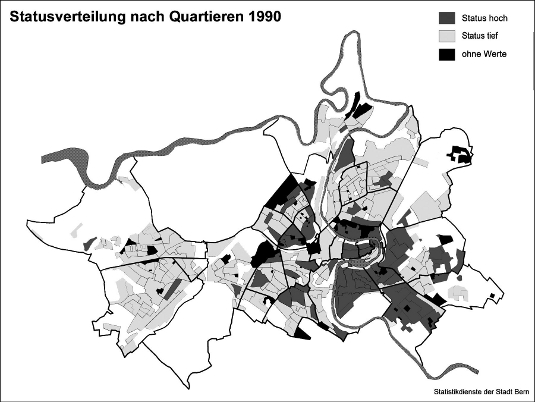
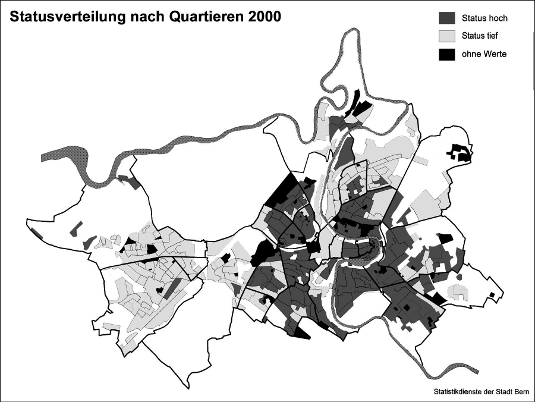
Dies gilt insbesondere für die grossen Metropolen. Aber auch in vielen Schweizer Städten ist seit längerem eine Tendenz zur verstärkten Segregation und Verdrängung ärmerer und sonst unliebsamer Schichten aus dem Stadtbild zu beobachten. So auch in der Stadt Bern, wo sich in den letzten zwei Jahrzehnten eine deutliche Aufwertung des sozialen Status der innenstadtnahen Quartiere vollzogen hat und sich diverse Sauberkeitskampagnen wie die Berner Wegweisungspraxis oder „CasaBlanca“ etabliert haben. Die Auswirkungen und die Rolle der städtischen Behörden innerhalb dieser Prozesse werden im Folgenden thematisiert.

Wettbewerb als Leitmotiv
Mit der Durchsetzung des Neoliberalismus als Wirtschafts- und Gesellschaftstheorie zum Ende der 1970er-Jahre, wurden Städte in eine neue Rolle versetzt. Angetrieben vom Spardruck, dem Dogma der Privatisierung und Deregulierung begannen die Kommunen ihren Besitz und ihre öffentliche Dienstleistungen zu privatisieren. Auch die gemeindeinternen Strukturen wurden zunehmend an marktwirtschaftliche Maximen angepasst, was in der Regel von einer Minderung der demokratischen Partizipationsmöglichkeiten begleitet wurde. Eine Entwicklung die nach 2004 und der Umstellung zum New Public Management auch in der Stadt Bern zu beobachten war.

Im regionalen Wettbewerb werden Städte als Standort vermarktet und somit in ein geographisches Konkurrenzverhältnis gesetzt und laufen so um InvestorInnen und SteuerzahlerInnen um die Wette. Die Folge dieser Entwicklung waren wirtschaftliche und politische Programme zur besseren Absicherung der Stadt im veränderten Umfeld. Programme, gemäss deren Logik sich Gemeinden aus baulicher wie sozialer Perspektive zwecks Budgetoptiemierung den Bedürfnissen der finanzkräftigen Schichten anzupassen haben. In den Kontext dieser Aufwertungsdynamik fallen, neben baulichen und mietpreissteigernden Massnahmen mit segregierender und verdrängender Wirkung, auch die teilweise Privatisierung des öffentlichen Raumes, die diversen Sicherheits- und Sauberkeitskampagnen so wie die Ökonomisierung von kulturellen Angeboten.

Wichtig jedoch zu betonen ist, dass Städte nicht als „Opfer“ eines übergeordneten Paradigmenwechsels verstanden werden dürfen. Neil Brenner und Nik Theodore betonen in diesem Kontext, in einer 2002 veröffentlichten Studie über den „Actually Existing Neoliberalism“ in der Stadt, dass alle bisherigen Phasen der Neoliberalisierung nicht nur in den Städten verankert seien, sondern in ihnen auch ihre intensivsten Aushandlungsprozesse durchliefen. Städte stellen somit einen integralen Teil der Produktion und Reproduktion der aktuellen wirtschaftlichen Mechanismen dar und sind so als Produkt und Voraussetzung der gegenwärtigen Form des Kapitalismus zu verstehen.

Verdrängung als Prozess
In seiner klassischen Form wurde Gentrification erstmals zu Beginn der 1960er-Jahre beschrieben. Damit wurde ein Prozess angesprochen, in dessen Verlauf Angehörige der unteren Einkommensschichten aus meist älteren und baufälligen, aber zentralen Stadtbezirken durch den Zuzug von wohlhabenderen Schichten verdrängt wurden. Seither hat das Konzept als Theoretisierungsansatz für sozio-ökonomische Verdrängungs- gekoppelt mit räumlichen Aufwertungsprozessen vielfach Anwendung gefunden.

Heute zeigt sich Gentrification als ein globalisiertes, aber lokal hoch spezifisches und ausdifferenziertes Phänomen. Ein Phänomen, das in den letzten Jahren stark durch die Kapitalisierung des Immobilienmarktes und dessen staatlichen Förderung beeinflusst wurde, sodass eine aktuelle Definition vier Punkte enthalten sollte: Erstens, Reinvestition von Kapital; zweitens, soziales Aufwerten durch Eindringen von besserverdienenden Schichten; drittens, Umwandlung der betroffenen Landschaft; und viertens, direkte oder indirekte Verdrängung von schlechterverdienenden Schichten.

Angetrieben wird diese Verdrängungs- und Aufwertungsmechanik von einem komplexen Wirkungsgefüge, aus sozialen und ökonomischen Faktoren. So sind für Neil Smith das massive Einfliessen von Investitionskapital in die Stadt kombiniert mit der teilweise schlechten Inwertsetzung von Bodenrente, für die zunehmende Verdrängung verantwortlich. Andererseits spielt der Wandel des Städtischen selbst eine zentrale Rolle. Der Kernaspekt dabei ist, dass die Stadt im Zuge des Wandels zur post-industriellen Gesellschaft gerade von den wohlhabenden jungen und gut ausgebildeten Exponenten als positive Antithese zum vorstädtischen Leben formuliert wurde. Gesamthaft bedeutet dies, dass eine doppelte Back to the City-Bewegung – die des Kapitals und die der Gentrifier – Ursache für die zunehmende Verdrängung ist.

Bern2000

Bern1990
Sozialer Status nach Quartieren im Vergleich (1990 / 2000), Quelle: Gächter 2006: Beilage 3, überarbeitet .

Gentrification und die Schweiz
Im Schweizer Kontext wurde der Gentrifiaction erst wenig Beachtung geschenkt. Aufgegriffen wurde das Phänomen in einigen Studien des Bundes so wie einzelner Städte. Im Rahmen einer Studie des Bundes, welche auf Volkszählungsdaten basiert, wurde festgestellt, dass viele Städte im Zeitraum zwischen 1990 und 2000 durch den Zuzug einer jungen und finanzstarken Schicht eine eigentliche Renaissance erlebt haben. Gleichzeitig aber, so die Studie weiter, hat die Zahl der FürsorgeempfängerInnen und Arbeitslosen am Stadtrand und in den Vorstädten erheblich zugenommen. Dass diese Entwicklung, welche sich durch steigende Mietpreise und einen anhaltenden Segregationsprozess auszeichnet, unvermindert anhält, wird im unlängst veröffentlichten Immo-Monitoring 2010 des Beratungsbüros Wüest & Partner verdeutlicht.

Eine der wenigen universitären Auseinandersetzungen zur spezifischen Situation der Gentrification in der Schweiz streicht vier zentrale Faktoren hervor, welche den Prozess im hiesigen Kontext fördern: Erstens, die Bundespolitik, welche mit ihrer institutionellen Organisation in Bund, Kantonen und Gemeinden den städtischen Wettbewerb fördert und aus Gründen der Nachhaltigkeit die Verdichtung nach innen gezielt voran treibt; zweitens, haben die Städte ihre Strategien angepasst und versuchen, ihre Attraktivität als Wohnstandort für potente SteuerzahlerInnen zu steigern; drittens, die notorisch herrschende Wohnungsnot, die den renditeorientierten Wohnungsbaumarkt anheizt; und viertens, das Wiedererstarken eines städtischen Lifestyles.

Die Lorraine ein Berner Stadtquartier
Das Lorrainequartier zählt an die 2’400 EinwohnerInnen und grenzt nördlich an die Berner Innenstadt, von welcher sie durch den Aaregraben getrennt ist. Lange Zeit galt das Quartier wegen des hohen AusländerInnenanteils und des Sex-Gewerbes als „Ghetto von Bern“. Diese Sichtweise herrschte auch beim Planungsamt vor, wo es galt, der „Verslumung“ des Quartiers Einhalt zu gebieten. Seit einigen Jahren jedoch gilt die Lorraine als neues Trendviertel der Stadt.

Dieser Wandel setzte in den 1980er-Jahren mit dem Einzug der linken Szene ein. Die ZuzügerInnen, welche das Quartier verjüngten, verkörperten eine neue Lebensweise und gründeten neue Wohnformen, Ausgangslokale und Bars. Sie brachten aber auch neues Kapital – gerade in Form von Wohnbaugenossenschaften – ins Quartier. Damit setzte eine Entwicklung ein, welche alsbald vom Zuzug einer wohlhabenderen Schicht und dem Einfliessen von städtischer Primärinvestitionen zwecks Anheizung privater Investitionen sekundiert wurde.

Dieser Wandel lässt sich auch statistisch belegen und die Daten sprechen eine deutliche Sprache. Gesamthaft gesehen hat das Quartier nämlich zwischen 1990 und 2000 den zweithöchsten Anstieg des sozialen Status der Berner Stadtquartiere verbuchen können. Der Status verblieb aber unter dem städtischen Mittel, was das Potential zur weiteren Gentrification offen legte. So erstaunt nicht, dass neuere Daten den Fortgang der Entwicklung belegen.

Aber auch baulich hat sich im Quartier in den letzten zehn Jahren einiges getan. So etwa wurde der Campus II der Gewerblich-Industrielle Berufsschule oder die Überbauung Vordere Lorraine errichtet. Diese Neubauten hatten aber wegen des Abrisses von günstigem Wohnraumes eine erhebliche Verdrängungswirkung. An anderer Stelle wurden diverse Gebäude totalsaniert. Auf dem Schnellgutareal wurde 2008 der Wylerpark fertiggestellt, der gemessen an den Mietpreisen sämtliche Rahmen sprengt. Zurzeit stehen weitere Neubauprojekte und Hauserweiterungen in Planung; darunter auch städtische Projekte. Den Projekten der letzten Jahren aber allen gemein ist, dass sie in die Stadtplanung eingebunden waren; sei es durch die Förderung von Sanierungen, städtischen Wettbewerben oder Gesamtplanungen.

Geplante Stadt
Die Stadtplanung ist auf verschiedenen räumlichen Skalen verankert und administrativ der Präsidialdirektion unterstellt. Für die Planung gelten einerseits das Übergeordnete Recht, andererseits bestehen in Bern konkrete Planungsleitlinien auf städtischer Ebene sowie Stadtteil bezogene Richtpläne; im Falle der Lorraine kommt noch eine Quartierplanung hinzu. Gesamtstädtisch sind wegen seiner Leitlinien definierenden Funktion das Stadtentwicklungskonzept (STEK) von 1995 und dessen Fortschreibungen von herausragender Bedeutung.

In der Analyse fällt auf, dass die Dokumente für Stadtteil und Quartier sehr technisch gehalten sind und sich mit konkreten baulichen Fragen beschäftigen. Frappant ist aber die Tatsache, dass obwohl durch das STEK die Vorgabe der ganzheitlichen Planung geben wäre, die sozialen Aspekte fast gänzlich fehlen. Insbesondere ist dies bei der Quartierplanung der Fall, die sich über weite Teile wie eine Marktstudie liest. Einzeln werden Stärken und Defizite des Quartiers abgearbeitet und das jeweilige Entwicklungspotential hervorgehoben.

Die gesamtstädtischen Dokumente hingen werden konkreter. Beispielhaft sind etwa der Vergleich des Konzeptes Wohnen, in dem die städtischen Ziele für die Wohnraumentwicklung festgehalten werden, des STEK 95 und dessen Fortschreibung 2003. So verschwinden in der Neuauflage die Richtlinien, welche einen sozialen Ausgleich anstrebten, fast gänzlich. Jene, die erhalten blieben, sind rein strukturell zum Scheitern verurteilt, weil der Wohnbau nahezu gänzlich in die Hände Privater gelegt wurde. Aktuell tritt die Stadt hingegen beim Neubau der Siedlung Stöckacker-Süd zum ersten Mal seit 1945 bei einem grösseren Wohnbauprojekt selbst als Bauherrin auf. Ironie ist aber, dass zwecks Realisierung dieses Projektes günstiger Wohnraum abgerissen wird und die Mietrpreise sich faktisch verdoppeln werden! Die Stadt werde den Betroffenen bei der Wohnungssuche behilflich sein, heisst es dort auf Anfrage.

Was die Zukunft bringen soll, wird in der Strategie 2020 dargelegt. Bern solle seine Standortvorteile weiter nutzen und dadurch auf 140’000 EinwohnerInnen anwachsen. Was dies planerisch bedeutet, wird bereits im Konzept Stadtentwicklung Wohnen im Jahr 2007 aufgezeigt. Darin verdeutlicht die Stadt ihre konzeptuelle Neuausrichtung auf die Bedürfnisse der Wohlhabenderen und betont, dass sie primär an potenten SteuerzahlerInnen interessiert ist.

Verdrängung als urbane Strategie
Die Folge dieser Politik zeichnet sich nicht nur mit der Gentrification in der Lorraine ab, sondern auch in der auf dem ganzen Stadtgebiet vorangetriebenen baulichen und sozialen Aufwertung. Ein Blick auf die geplanten Projekte der nächsten Jahre zeigt, dass die Stadt künftig ihren Schwerpunkt in Berns Peripherie – vor allem in Bern West und Nord – legen will. In Stadtteilen also, die bis anhin als Wohnraum für ärmere Schichten diente. Die dahinter liegende Logik der Aufwertung wird vom Gemeinderat im Zusammenhang mit der „sozialen und ethnischen Durchmischung“ gar explizit formuliert:
„Sind die Wohnbauprojekte im Westen realisiert, wird sich voraussichtlich auch die demografische Zusammensetzung in diesen Quartieren verändern“
Alles in Allem hat der Gentrificationsprozess für die Stadt im Wettbewerb in doppelter Hinsicht eine „positive Wirkung“. Zum einen ziehen wohlhabendere Menschen in die Stadt, zum anderen aber ermöglicht es den Kommunen, sich quasi aus einem ökonomischen Zwang heraus, der ärmeren Schichten durch Verdrängung über die Gemeindegrenzen zu entledigen und so Einsparungen bei den sozialen Ausgaben zu tätigen. Insofern ist der Prozess zu verstehen, als lokale Ausprägung eines segregierenden Kampfes um Raum, der sich unter den Bedingungen des kapitalistischen Wettbewerbs zwangsläufig etabliert. Die gentrifizierenden Städte sind in diesem Sinne „Räume der Sieger“ des Wettlaufes um Investitionen und Prestige, während die „Räume der Verlierer“ auf der Strecke bleiben.

Vertiefung und weitere Infos:
link_ikon Gentrification: Die Debatte in der Schweiz 2010 – eine Bestandsaufnahme

link_ikon Gentrification und Neoliberalisierung: Eine kritische Analyse der Berner Stadtplanungsdokumente am Beispiel des Lorrainequartiers
link_ikon Bern: «Trend zurück in die Stadt ist ungebrochen»
link_ikon „Neoliberale Stadt“ – Entwicklungen und Folgen einer neoliberalen Stadtpolitik
link_ikon Literatur zur Berner Stadtplanung, Gentrification und Neoliberalisierung von Stadtpolitik

Dieser Artikel erschein bei Kritische Geografie

europa

Frontex und Grenzzaun in Griechenland

onlineredaktion – Die griechisch-türkische Grenze führt durch flaches Land am Fluss Evros und dem Flussdelta entlang. Doch die grüne Idylle soll ein Ende haben: Der angebliche Ansturm sogenannter illegaler Flüchtlinge aus der Türkei müsse eingedämmt werden, so das griechische Ministerium für Bürgerschutz.

Zu diesem Zweck hatte Griechenland schon vor zwei Monaten die Hilfe der EU-Grenzagentur Frontex angefordert. Seit November steht nun die erste Frontex-Eingreiftruppe an Griechenlands Grenze, bestehend aus 200 Beamten, darunter auch deutschen Polizisten.

Doch damit nicht genug. Am vergangenen Samstag kündigte Bürgerschutzminister Christos Papoutsis vollmundig den Bau einer insgesamt 206 Kilometer langen Barriere zur Türkei an. Nach heftiger internationaler Kritik ruderte die griechische Regierung nun zurück. Neuerdings ist nur noch von er 12,5 Kilometer langen Sperre die Rede.

Wir sprachen mit dem Journalisten Matthias Monroy über die geplante Grenzsicherung und die Rolle, die EU und ihre Agentur Frontex dabei spielen.

Zunächst wollten wir wissen, ob seiner Meinung nach mit dem Bau eines realen Zauns zu rechnen ist. Oder geht es eher um eine virtuelle Mauer?

Wir sprachen mit dem Journalisten Matthias Monroy

link_ikon Den Beitrag hören

spionage

Bookreview – ‚Fallout‘ by Catherine Collins and Douglas Frantz

Brian Michael Jenkins – A.Q. Khan, a Pakistani scientist, created a global network to secretly obtain and sell the capability to go nuclear. Two journalists sniff out the efforts of U.S. and British intelligence to penetrate and dismantle that network.

Anyone concerned about nuclear proliferation or interested in the world of espionage will want to read Catherine Collins and Douglas Frantz’s provocative new book, „Fallout: The True Story of the CIA’s Secret War on Nuclear Trafficking,“ which tells a fascinating story whose characters come straight out of a spy novel.


Illustration of A.Q. Khan for the review of „Fallout: The True Story of the CIA’s Secret War on Nuclear Trafficking“ (Shonagh Rae / For The Times / January 9, 2011)

The emergence of Pakistan, North Korea and potentially Iran as nuclear states owes much to the work of one man, A.Q. Khan, a Pakistani scientist who created a clandestine global network to secretly obtain and sell the capability to go nuclear. At first, his efforts were devoted exclusively to making Pakistan a nuclear power, but driven by greed and intense hatred of the United States, he soon became a global supplier of nuclear weapons know-how and the specialized equipment required to make atomic bombs. The head of the International Atomic Energy Agency, the U.N.’s nuclear watchdog, described Khan’s clandestine network as a nuclear “ Wal-Mart.“

The efforts of the CIA and British intelligence to penetrate and dismantle the Khan network are the subject of „Fallout,“ which serves as a kind of sequel to the authors‘ previous book, „The Nuclear Jihadist,“ and, of necessity, repeats some of the same material.

But their continuing investigations and interviews with sources in the intelligence community and their principal informants also offer additional details and observations as well as remarkable success stories, such as the CIA’s recruitment of the Tinner family (father and sons), Khan’s Swiss confederates. The information the Tinners provided enabled American and British intelligence to uncover Khan’s operations in Europe, Dubai and Malaysia, subtly alter blueprints and sabotage equipment destined for his customers, and intercept a shipment of vital nuclear components headed for Libya.

Books about contemporary espionage come with a warning label: No matter how much is leaked, authors never have all the facts. They know only what they are told by people who have an interest in contests yet to be resolved. No one speaks in the interest of truth; information is provided only to advance national, institutional or personal agendas.

Collins, a former foreign correspondent for the Chicago Tribune, and Frantz, a former managing editor of the Los Angeles Times and correspondent for the New York Times, describe what must have been a frustrating interview with the talented CIA agent who recruited the critical informants inside Khan’s network. He evaded all of the authors‘ questions, then left them with a slip of paper on which was written, „The most important part of the story is the piece of it you don’t know.“

Concerned that a well-written history, however interesting, might not suffice to attract readers, publishers too often push for a headline-grabbing angle. Government incompetence, a cover-up or imminent danger are reliable themes, but they can also distract from a solidly supported narrative such as „Fallout’s.“ Though they admire the CIA’s success, the authors remain critical of America’s failure to dismantle Khan’s network sooner. In their view, Khan was able to steal secrets and peddle his black-market connections far longer than was necessary. They are also critical of what they describe as a „cover-up“ subsequently engineered by Washington to prevent the public from finding out just how tarnished its intelligence victory was.

Many in the intelligence community would disagree with these assertions. There is often tension between the need to take action and the need to collect more information. It is a classic intelligence quandary. The Khan network was a complex enterprise that took decades to assemble. Thus it took time for outsiders to understand all of its dimensions. Acting prematurely might have only temporarily disrupted one tentacle of Khan’s operations rather than delivering a strategic blow. Networks are inherently resilient, hard to kill. Previous investigations and warnings to several of Khan’s confederates had not stopped them.

Read all at LA Times
sendenDer Fall Tinner

spionage

C.I.A. Secrets Could Surface in Swiss Nuclear Case

WILLIAM J. BROAD and DAVID E. SANGER – A seven-year effort by the Central Intelligence Agency to hide its relationship with a Swiss family who once acted as moles inside the world’s most successful atomic black market hit a turning point on Thursday when a Swiss magistrate recommended charging the men with trafficking in technology and information for making nuclear arms.

The prospect of a prosecution, and a public trial, threatens to expose some of the C.I.A.’s deepest secrets if defense lawyers try to protect their clients by revealing how they operated on the agency’s behalf. It could also tarnish what the Bush administration once hailed as a resounding victory in breaking up the nuclear arms network by laying bare how much of it remained intact.

“It’s like a puzzle,” Andreas Müller, the Swiss magistrate, said at a news conference in Bern on Thursday. “If you put the puzzle together you get the whole picture.”

The three men — Friedrich Tinner and his two sons, Urs and Marco — helped run the atomic smuggling ring of A. Q. Khan, an architect of Pakistan’s nuclear bomb program, officials in several countries have said. In return for millions of dollars, according to former Bush administration officials, the Tinners secretly worked for the C.I.A. as well, not only providing information about the Khan network’s manufacturing and sales efforts, which stretched from Iran to Libya to North Korea, but also helping the agency introduce flaws into the equipment sent to some of those countries.

The Bush administration went to extraordinary lengths to protect the men from prosecution, even persuading Swiss authorities to destroy equipment and information found on their computers and in their homes and businesses — actions that may now imperil efforts to prosecute them.

While it has been clear since 2008 that the Tinners acted as American spies, the announcement by the Swiss magistrate on Thursday, recommending their prosecution for nuclear smuggling, is a turning point in the investigation. A trial would bring to the fore a case that Pakistan has insisted is closed. Prosecuting the case could also expose in court a tale of C.I.A. break-ins in Switzerland, and of a still unexplained decision by the agency not to seize electronic copies of a number of nuclear bomb designs found on the computers of the Tinner family.

One of those blueprints came from an early Chinese atomic bomb; two more advanced designs were from Pakistan’s program, investigators from several countries have said.

Ultimately, copies of those blueprints were found around the globe on the computers of members of the Khan network, leading investigators to suspect that they made their way to Iran, North Korea and perhaps other countries. In 2003, atomic investigators found one of the atomic blueprints in Libya and brought it back to the United States for safekeeping.

Mr. Müller, the Swiss magistrate, investigated the Tinner case for nearly two years. He said Thursday that his 174-page report recommended that the three men face charges for “supporting the development of atomic weapons” in violation of Swiss law.

Read all at New York Times
sendenDer Fall Tinner

spionage

The “Exceptionally “Redacted 9/11 Commission Interview

Sibel Edmonds – Last week John Young’s information site Cryptome.Org began publishing documents related to the interviews conducted by the 9/11 Commission which were released for the first time. On January 3, Cryptome posted the 9/11 Commission’s report on my interview (the infamous Sibel Edmonds Case), and aptly titled this particular file as “Sibel Edmonds Censored Yet Again.” Once you read the PDF document you’ll quickly see the reason for Cryptome’s appropriate label. The entire report, by that I mean the entire report, is blacked out (actually, whited-out;-). It took me less than one minute to scan the entire document; basically, scrolling down the white pages-one white page after another. Initially, I was not a bit surprised. Hey, I’ve been declared the most gagged and classified person in US history, after all- State Secrets Privilege invocation twice, gagging the entire Congress for the first (and only) time in US history, hundreds of pages of blacked out DOJ-IG report… So, as I said, I didn’t find it a bit surprising.  However, after the minute it took to go over these blank pages, I started clicking and scanning all the other files (interviews by the 9/11 Commission), and that’s where I was truly surprised:

Despite some redactions here and there, and in a few cases fairly extensive redaction, there were no interviews where the entire interview (and the report on the interview) was blacked out in its entirety. Mine was the only one privileged and honored to such degree! Why? I mean, come on, we are talking about interviews with: FBI Special Agent in Charge on Counterterrorism, CIA Officers with Directorate of Intelligence with a Specific Focus on Drugs & Thugs, The Chairman of National Intelligence Council, NSA Chief of Counterintelligence & SIGNIT Support, Senior CIA Analysts…Yet, none of these interviews was redacted in its entirety. None. Please be my guest and make your own comparison; My 9/11 Commission interview document here, and the rest, here, here, here, here, here…You can check out the rest published by Cryptome here, and if you want more here for thousands of them.

I e-mailed Mr. Young to get his opinion and ask whether he had noticed the same interesting phenomena. He confirmed my observation and we shared the exact same conclusion: This particular interview was ‘exceptionally’ redacted.

Next, I started all over again, and this time I checked for the location of these interviews conducted by the 9/11 Commission. Why? Because after checking with the DOJ/FBI/State Department/DOD, the 9/11 Commissioners insisted that my interview to be conducted in a SCIF (Sensitive Compartmented Information Facility). I was stuck inside one of these almost airless highly claustrophobic dungeons for over three hours for my interview. I was told by the commission staff that this was due to the ‘extreme secret and sensitive nature of Ms. Edmonds’ information.’ Yet, none of the high-level counterterrorism officials, CIA operatives and agents, senior analysts…(at least all the ones I’ve scanned so far) were required to give their interviews inside a SCIF, or even a cleared room (they have specialists come and declare the room/facility clear & free of bugs). When you go to my interview document (here), look at the top of the page, find ‘location’ and see what it says. For mine it says: GSA SCIF. Now, if you were to go to all the other documents and check the interviewees’ location for the  interview, you’ll see No SCIF, and locations like: Commission’s K Street Office (regular meeting room), or, regular offices or meeting rooms within various government agencies & HQs.

Another interesting point that came to me later had to do with the length of the Commission’s redacted interview with me. I know I was in there for over three hours, and at the top of the report they actually confirm that. I know I didn’t waste time talking about the employment and whistle blowing aspects of my case, instead I asked them to get that info from the IG or various congressional offices. I spent over three hours talking, answering questions, and writing for the 9/11 Commission investigators, with no break, no interruptions, and not even a pause for side conversations. I have transcribed interviews, I have typed many pages of phone/recorded conversations at the FBI while a translator,  I have prepared many reports based on interviews, and I know that there is no way in this world you can transcribe or report on three hours of nonstop interview, especially mine, in less than 10-12 pages (single spaced!). Yet, the total number of redacted pages released by the 9/11 Commission totals about 5 pages. What else did they do with my interview besides redacting? This is what I call ‘sending it to a never-to-be retrieved Black Hole.’

I wonder what the US media has to say on this; especially the ones who’ve done their share of censoring and redacting on this particular case. Any ideas?

This article was published at Boiling Frog Post

kriminalitaet

BayernLB Skandal: War Gierbanker Gerhard Gribkowsky ein Maulwurf?

Dr. Alexander von Paleske —8.1. 2011 — Der Skandal um die 50 Millionen US-Dollar aus der Karibik, die auf dem Konto der gemeinnützigen Stiftung des seinerzeitigen Bayern-LB Vorstandsmitglieds, dem mittlerweile verhafteten Gerhard Gribkowsky landeten, zieht immer weitere Kreise.

Nachdem wir uns zunächst im Rahmen einer Satire mit diesem offensichtlichen Skandal beschäftigt haben, fassen wir hier noch einmal die Fakten, Indizien und Verdachtsmomente zusammen:

– Anfang des Jahres 2004 wird in der Schweiz ein Konto bei der UBS eröffnet. Kontoinhaber: Die Hypo-Alpe Skandalbank. Das Konto wird Ende 2004 wieder geschlossen.

– Im Jahre 2004 fließen 51 Millionen Dollar von der Hypo-Alpe auf dieses schweizer Konto, und von dort in die Karibik, auf ein Konto der Bank of Bermuda, eine Bahamas-Bank, die dann von der HSBC gekauft wurde. Die HSBC hatte wiederum enge Geschäftskontakte mit der Hypo-Alpe-Skandalbank.

– Ein weiterer Betrag in Höhe von 3,2 Millionen Euro wurde auf dieses UBS-Konto im gleichen Jahr transferiert.

– Diese drei Millionen werden nicht in die Karibik, sondern auf die Tochterbank der Hypo-Alpe (Skandalpe) in Liechtenstein weiter transferiert und von dem damaligen Vorstand Kulterer dort im Jahre 2005 bar abgehoben. Kulterer bestreitet, das Geld sei für ihn bestimmt gewesen, er verweigert die Auskunft, für wen er das Geld in bar abgehoben habe, es sei für einen Kunden gewesen.

– Im Jahre 2007 gründet dann Gribkowsky die Sonnenscheinstiftung in Salzburg, Vorstand wird der austrische Rechtsanwalt Toifl.

– Insgesamt werden 50 Millionen US-Dollar in diese Stiftung eingezahlt, das Geld kommt aus der Karibik und aus Mauritius.. Zunächst landen die 50 Mio. bei der 2008 liquidierten GG Consulting. Geschäftsführer war neben Gribkowsky ebenfalls wieder Toifl.

. Das Geld wird in Österreich versteuert, der Stiftung wird ein gemeinnütziger Anstrich gegeben „für krebskranke Kinder“, ohne dass über nennenswerte mildtätige Gaben der Stiftung etwas bekanntgeworden ist. Ganz im Gegenteil: Die Sonnenschein-Unterfirma Grep GmbH hat offenbar am Prenzlauer Berg in Berlin 170 Wohnungen eingekauft, und sogleich versucht, miethaimässig die Mieten in die Höhe zu treiben

– Ein sofort von der Raiffeisenbank Österreichs erhobener und zur Anzeige gebrachter Geldwäschevorwurf konnte „ausgeräumt“ werden. Die Summe war als „Honorar aus einem Beratungsvertrag im Zusammenhang mit der Formel 1″ deklariert worden.

– Im Jahre 2002 „erbt“ die Bayern LB nach der Pleite des Medienimperiums von Leo Kirch dessen Verwertungsrechte an der Formel 1. Kirch war zuvor von der Bayern LB mit einem Milliardenkredit unterstützt worde.

– Die BayernLB war zusammen mit anderen Gläubigern zunächst auf Konfrontationskurs gegen Formel 1-Macher Bernie Ecclestone gegangen. Dann kommt im Jahre 2005 ein überraschender Schulterschluss und ein Verkauf der Rennsportrechte an die Investmentgesellschaft CVC, die mit Ecclestone zusammenarbeitet. Der genaue Verkaufspreis ist nicht bekannt, er soll im einstelligen Milliardenbereich liegen. Vorstandsmitglied der BayernLB, Gribkowsky führte die Verhandlungen und brachte sie zum Abschluss, ohne eine Neubewertung der Vermarktungsrechte vorzunehmen.

– Es wird jetzt allgemein der Verdacht geäußert, Gribkowsky könnte die 50 Millionen US Dollar auf Umwegen als „Belohnung“ bzw. als Bestechungsgeld von dem Käufer CVC oder Ecclestone erhalten haben.

– Es besteht weiter der Anfangsverdacht, dass Wolfgang Kulterer dann die 3,2 Millionen Euro als „Belohnung“ für die Verschleierungsaktivitäten erhalten hat.

Sollten sich diese Verdachtsmomente bestätigen, dann ist der Verkauf der Hypo Alpe an die BayernLB im Jahre 2007 allerdings in einem ganz anderen Licht zu sehen. Ein Geschäft, das der BayernLB und damit dem bayerischen Steuerzahler einen Verlust von 3,7 Milliarden Euro einbrachte.

Dann bestünde nämlich der Verdacht, dass die Hypo- Alpe einen Maulwurf – Gribkowsky – im Vorstand des Käufers, also der Bayern LB, gehabt hatte, mehr noch, dass der Finanzinvestor Tilo Berlin dann offenbar ein absolut todsicheres Geschäft vor Augen hatte, als er vor dem Verkauf an die BayernLB bei der Hypo-Alpe einstieg, und ein halbes Jahr später mit dem Verkauf der Anteile an die BayernLB einen schönen Gewinn von 150 Millionen Euro einstrich, für sich und seine Kunden, darunter auch die Familie Flick und Marina Giori-Swirowski, Schwiegermutter des ehemaligen österreichischen Finanzministers Grasser .

Seit Anfang 2007 beschäftigen wir uns mit den Skandalbanken Hypo-Alpe und Bayern LB. Es sieht so aus, dass die Skandale weit davon entfernt sind, bald zum Abschluss zu kommen.

Nachtrag 9.1. 2011
Wie die österreichische Zeitung Kurier heute meldet, soll hinter der 3 MillionenTransaktion über die schweizer Bank UBS nach Liechtenstein der österreichische Waffenproduzent Gaston Glock stecken, und nicht Gribkowski. Ob Gribkowsky hinter der 51 Millionen US Dollar-Transaktion auf die Bahamas steckt ist nach wie vor offen.

Zentraler Artikel für alle bis Dezember 2008 angelaufenen Hypo-Alpe Skandale
linkBayernLB-Tochter Hypo Group Alpe Adria – Reicht mir die Hand, meine Skandale

Weitere Hypo Alpe Artikel
link Ex-Premier Kroatiens Ivo Sanader verhaftet – „nur“ Korruption oder auch Mordvorwurf?
linkBayernLB Ex-Tochter Hypo Alpe Adria Bank in Journalistenmord verwickelt?
linkJoca Amsterdam (Sreten Jocic) oder: die Blutspur eines Mafiosi durch Europa
linkHypo-Alpe-Bank und Österreich – Wenn eine Bank zum „Rattennest“ und ein Staat zur Skandalrepublik wird

linkSkandalbank Hypo-Alpe (Skandalpe), BayernLB und der Teil-Weisswaschgang der CSU
linkBayernLB kann Schadenersatz für Hypo-Alpe (Skandalpe)-Debakel fordern – oder doch nicht?
linkDie 3,7 Milliarden Hypo-Alpe-Pleite: Stoiber wusste angeblich von Nichts
linkEx Hypo-Alpe-Adria Chef Wolfgang Kulterer – Die lange Reise des österreichischen Bankmanagers in den vorläufigen Knast
linkHypo Alpe Adria Bank (Skandalpe) – die endlose Geschichte – Was bleibt?.
linkEx BayernLB-Tochter Hypo-Alpe-Adria-Bank (Skandalpe) – wieviel Gülle kommt noch hoch?
linkSkandal-Update: Hypo-Alpe-Adria Bank (Skandalpe)
linkBayernLB prüft Schadensersatzansprüche – eine PR-Geschichte?
Der Fall Hypo Alpe-Adria (Skandalpe) – Eine Abschlussbetrachtung
linkHypo-Alpe-Skandalbank – Am Ende Sozialisierung der Verluste
linkVerlustbank BayernLB zahlt weiter: Noch eine Milliarde Euro an die Hypo- Alpe
linkHypo Alpe Adria und BayernLB – Haben die Flick -Erben mitverdient?
linkHypo-Alpe-Adria-Bank – vorwärts abwärts
linkVon Milliardengrab zu Milliardengrab: BayernLB-Tochter Hypo- Alpe Adria hat neuen Vorstand

Zur Skandalrepublik Österreich
link Österreich – Ein Land versinkt im Skandalsumpf
link Österreich: Paradies für Wirtschaftskriminelle?
linkEin APO-Mann aus Wien – Martin Schlaff
Neues aus Oesterreich – von Skandalen, Neubesetzungen und Freisprüchen

Satire zum Thema
linkEx- BayernLB-Manager Gerhard Gribkowsky verhaftet – Die Strafverfolgung eines Unschuldigen
linkGuten Morgen Deutschland, ich bin KHG, der Karl-Heinz Grasser aus Wien
link SPÖ-Ex Bundeskanzler Gusenbauer schreibt an Deutschlands Ex-Kanzler Gerhard Schröder
linkMuammar el Gaddafi: Jetzt rede ich zum Thema „Jörg Haider und die Euro-Millionen“